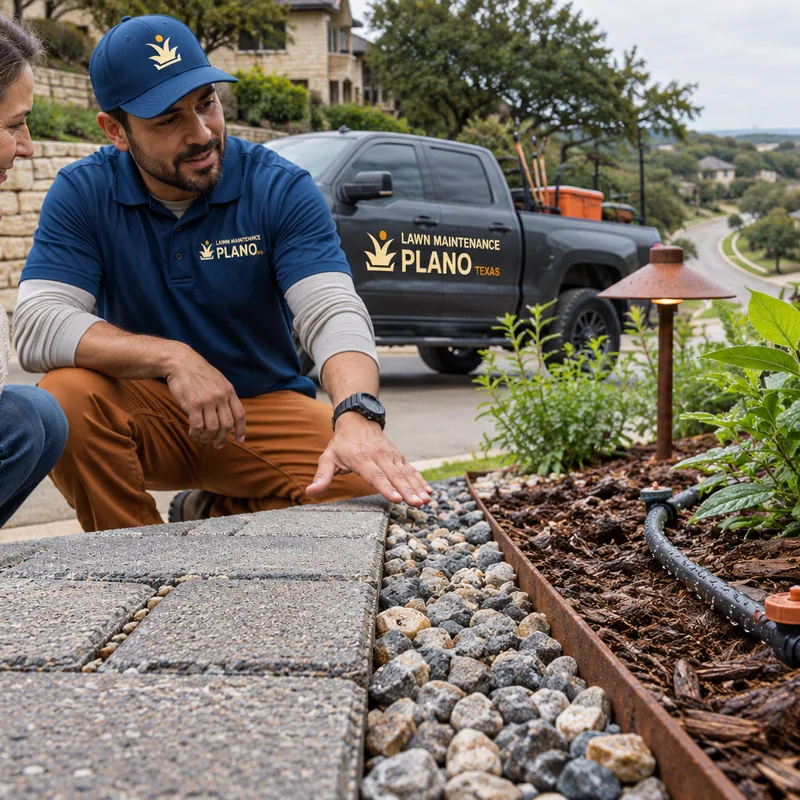
A design is especially useful when the project changes drainage, irrigation, walkways, patios or several planting areas. It establishes dimensions, circulation and site preparation first, so plant and material choices support the same plan. For a small bed refresh, a simpler planting layout may be enough.
The contractor should check grades, runoff, sun exposure, existing trees, soil drainage, irrigation coverage, utilities and access. Mature plant dimensions and required clearances around walls, equipment, windows and walkways also matter. In Plano, the design should account for intense summer sun and the behavior of compacted clay soil.
Choose plants by site conditions and mature size rather than appearance alone. The contractor should distinguish full-sun areas from reflected-heat zones and deep shade, then consider drainage, irrigation and maintenance needs. Texas A&M AgriLife resources and the Earth-Kind approach can help identify adapted choices for North Texas conditions.
A design can incorporate healthy trees and usable hardscape when their locations fit the new layout. The contractor should assess root zones, drainage and grade changes before planning excavation or paving near a tree. Existing patios and walkways should also be checked for settlement, poor drainage and awkward connections.
Drainage should be assessed before planting beds or hardscape are finalized. A contractor may consider grading, swales, catch basins, channel drains or downspout routing based on where the water originates and where it can discharge. Ask how the proposed layout protects the foundation and avoids directing runoff toward adjacent lots.
The contractor can identify parts of the proposed work that may require approval, but the exact responsibility should be stated in the proposal. Plano homeowners may need to check City of Plano requirements for work such as certain structures, electrical changes or irrigation modifications, along with any HOA rules that apply to the property.
Compare the drawing and written scope together. Look for named materials, plant species and container sizes, bed preparation, drainage work, irrigation changes, lighting allowances, disposal, cleanup and care instructions. Ask how material or plant substitutions are handled and request the contractor's warranty terms in writing.